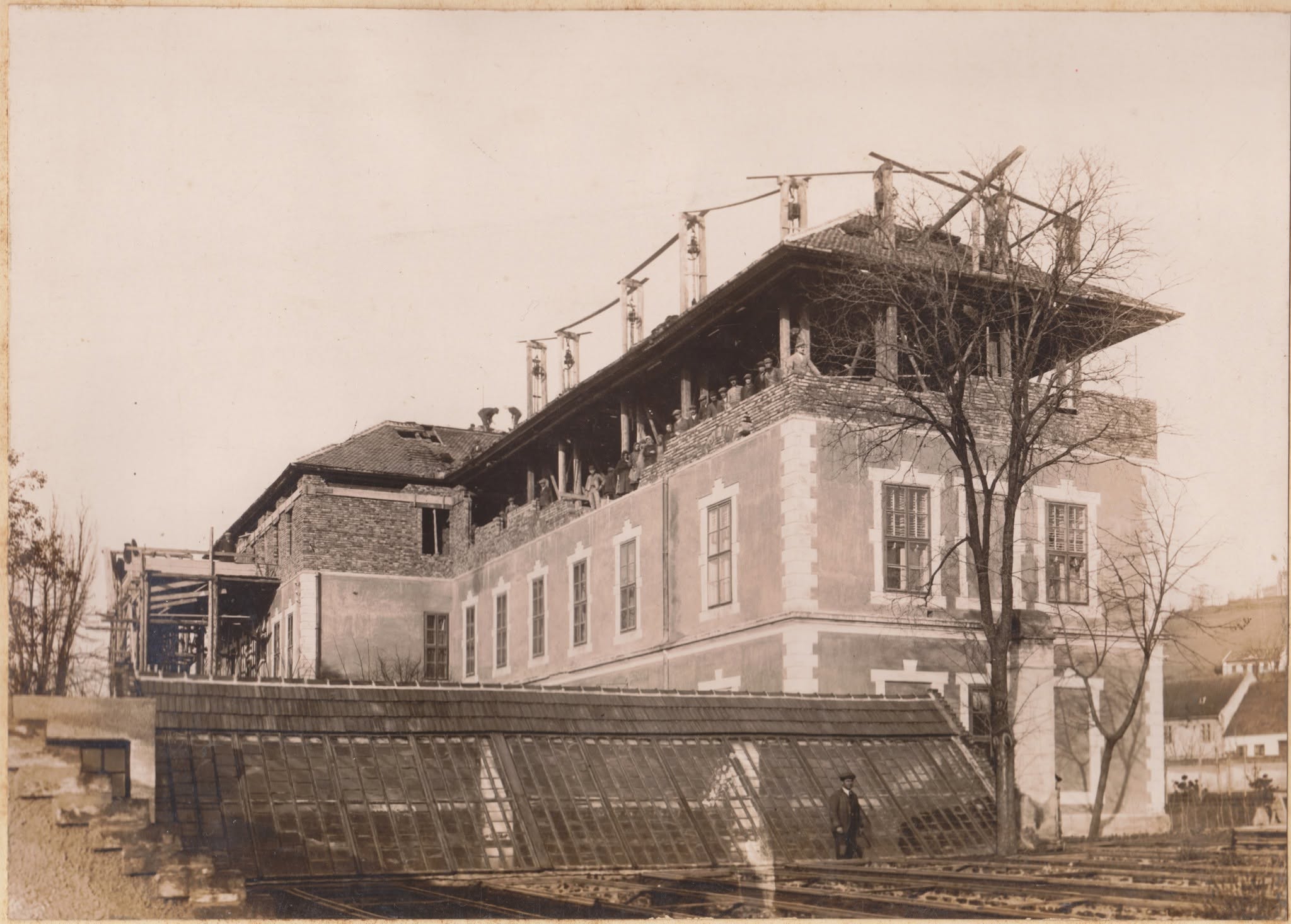
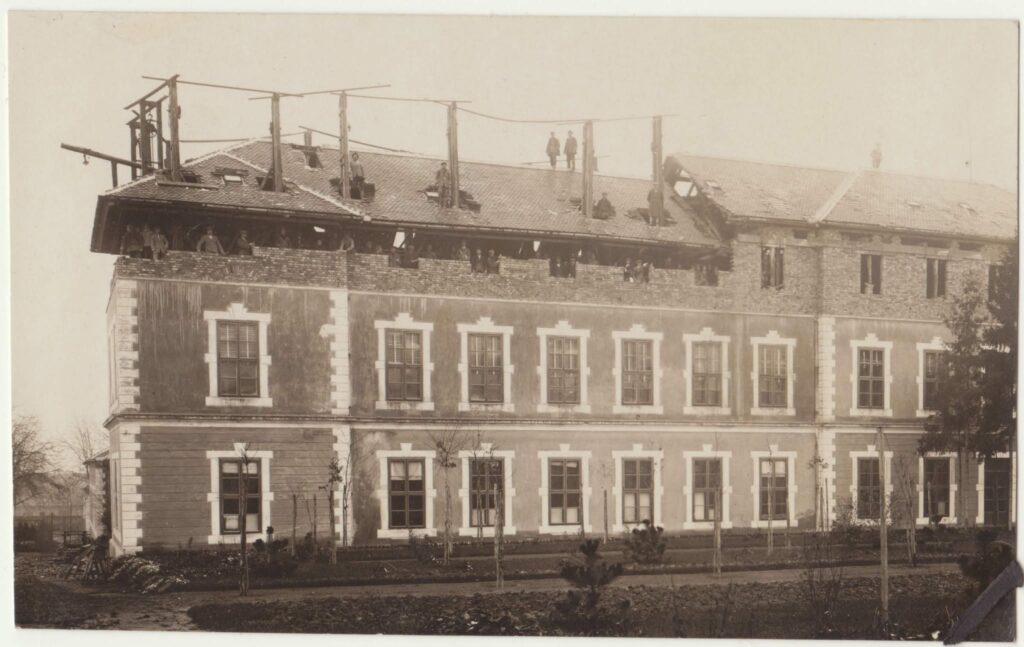
In 1931, workers in Esztergom carried out an extraordinary construction project: they lifted an entire existing roof to build a new floor underneath it. Two remarkable photographs capture this unusual feat of engineering, including scenes rarely seen in historical construction records.
The building of the Officers’ Holiday Resort in Esztergom originally served as an Imperial and Royal military field hospital. It stood in the middle of a large park covering approximately four acres. Following the Treaty of Trianon, in 1920, the Hungarian Ministry of Defence decided to convert the military hospital into a holiday resort and thermal treatment hospital for commissioned officers. The institution officially opened on July 20, 1920, initially accommodating 50 guests.
Its primary purpose was to provide medical treatment and rest for professional military officers suffering from exhaustion, general weakness, anaemia or rheumatic conditions. Their family members were also welcome.
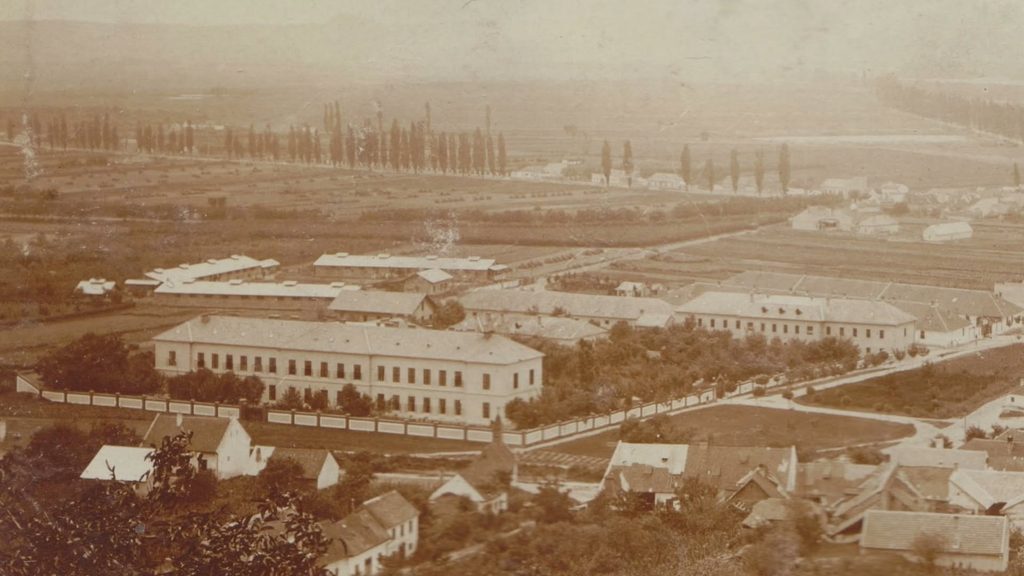
By the late 1920s, the existing building was no longer considered large enough to meet growing demand. Discussions about its expansion began in 1930 between the Ministry of Defence and the Ministry of the Interior, and construction work was carried out in 1931. The most significant part of the project involved adding an entire floor to the existing building. The work was undertaken by contractor József Szente. At the same time, the surrounding park was also enlarged and renovated.
On December 3, 1930, the local newspaper Esztergom reported that:
“Work on the upper floor of the Officers’ Holiday Resort began last Saturday. The municipal engineering office assigned 81 workers to the project and, given the extraordinary urgency of raising the roof before the rainy weather set in, requested permission from the police to work on Sunday as well. Work therefore continued throughout Sunday, and as a result, three-quarters of the roof-raising operation had already been completed by today. A specially reinforced upper-floor structure had to be designed, and this proved entirely successful. The remaining section of the roof is scheduled to be raised on Thursday, after which work will be able to continue even in the worst weather conditions.”
The expansion involved a particularly unusual construction method, one that is not mentioned in the contemporary newspaper reports or later publications we have come across. However, several rediscovered photographs provide compelling evidence of how the work was carried out: the existing roof structure was lifted using temporary supporting and hoisting equipment, allowing the builders to construct the second floor underneath it.
The period photographs clearly show the columns, beams and pulley systems used to support and raise the roof, as well as the bricklaying work taking place below. The project was carried out by contractor József Szente, with construction continuing despite the challenging weather conditions.
The expanded resort officially opened on November 1, 1932. It now offered between 57 and 62 guest rooms, increasing its capacity from approximately 70–80 to 130–140 people.
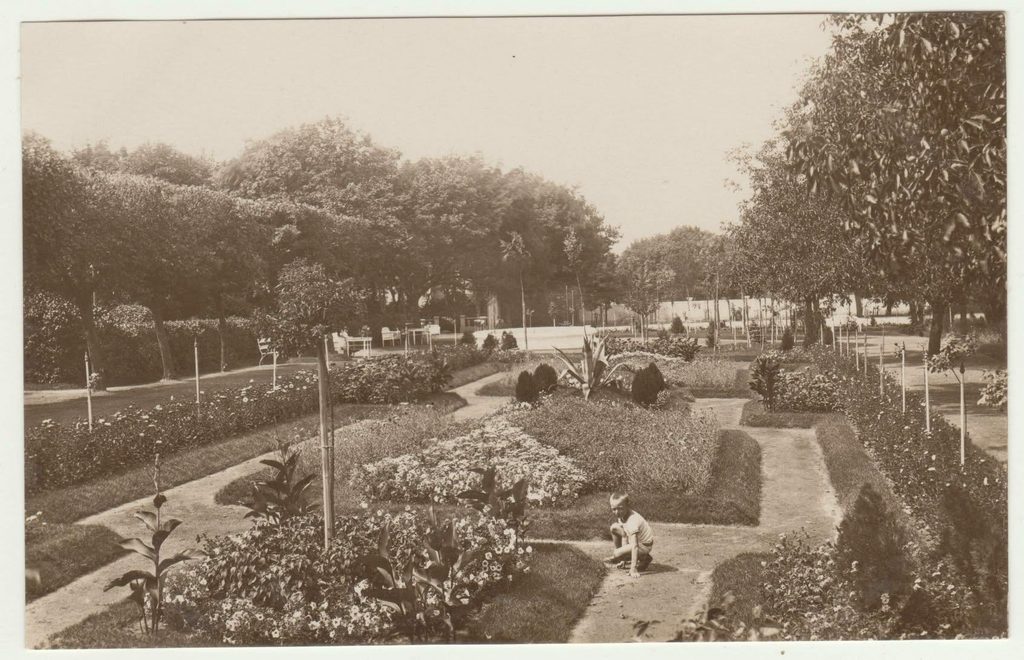
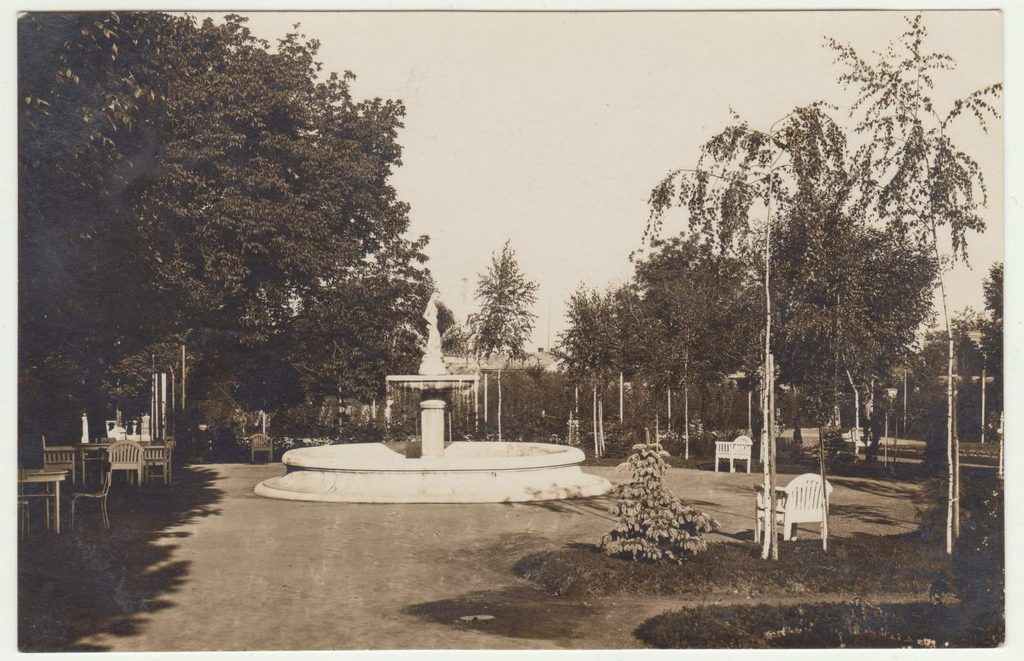
In addition to accommodation, the building featured a lounge, reading room, billiards room, several dining rooms, a doctor’s office and a chapel. The extensive landscaped grounds included tennis and bowling courts, a children’s playground and a fountain.
The resort even operated its own horse-drawn carriages, providing transportation to the nearby thermal baths and for excursions. It typically welcomed military officers and their families from early June until the end of September.
According to the 1931 edition of Magyar Katonai Szemle (Hungarian Military Review), the expansion made the Esztergom resort the largest facility of its kind in Hungary in terms of accommodation capacity.
During the Second World War, the building partly took on a different role. Following Germany’s invasion of Poland in 1939, some of the Polish refugees who arrived in Hungary were accommodated there. In 1944, plans were once again drawn up to expand and reconstruct the complex, but the worsening wartime situation prevented them from being carried out.
After the war, the resort grounds gradually lost their original unity. Today, rows of houses and garages, together with a residential estate, have divided up what was once a beautifully maintained garden. Fortunately, historical photographs still allow us to appreciate the surroundings in which Hungarian military officers once spent their holidays.
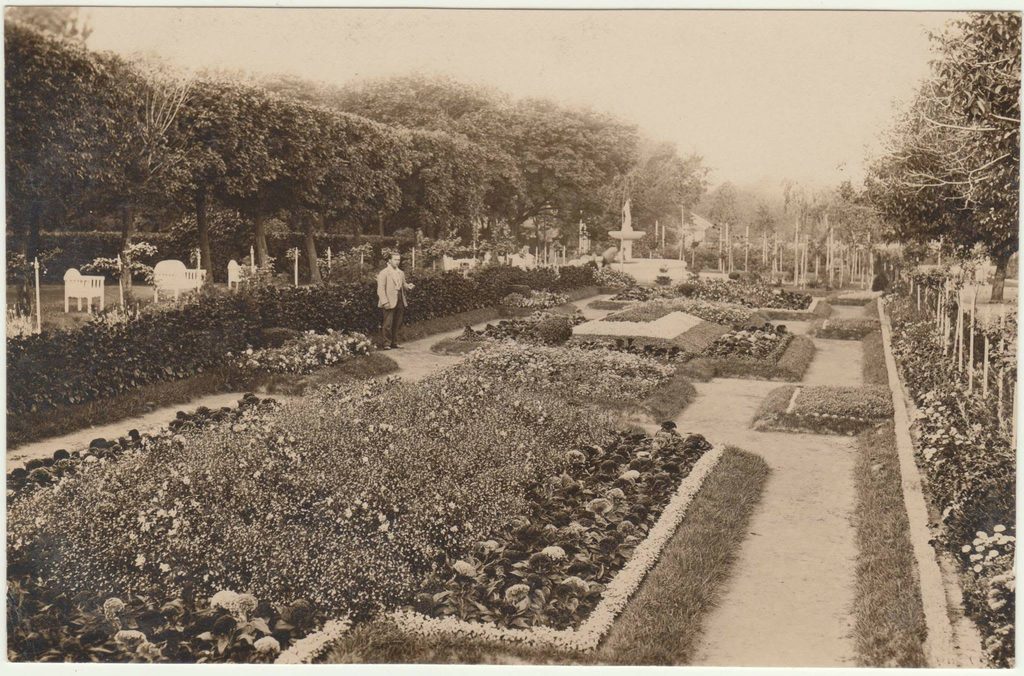
Hungarian Military Review / Magyar Katonai Szemle, 1931, Vol. 1, No. 2, p. 252.
If you’d like to compare how the building looks today from the same angle as in the opening photograph, click here to see it on Google Maps.
Historical photographs: Bence Viola / Villy’s private collection.
Kövess minket a Facebookon!
További történetekért, érdekességekért és helytörténeti tartalmakért kövess minket Facebook-oldalunkon.
Regia Civitas